 Latest Breaking News Online News Portal


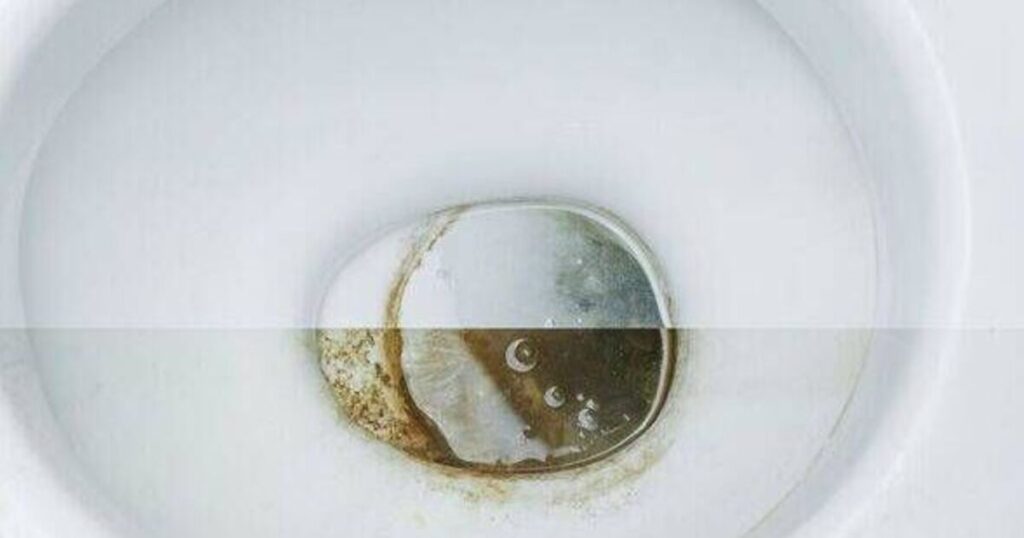
Limescale remains a persistent bathroom headache that seems nearly impossible to eliminate, regardless of your efforts. Residing in a hard water region only exacerbates the issue, as mineral deposits accumulate rapidly on surfaces. Despite consistent cleaning routines, the chalky build-up invariably returns within a matter of weeks.
Eager to discover a swift and efficient remedy, I consulted three specialists who focus on limescale removal. I sought their preferred natural approach that avoids harsh chemicals – and remarkably, they all recommended the identical method. Below, discover the optimal technique to eliminate limescale in less than 24 hours.
How to banish limescale naturally
Comment from James Roberts, Director at Sanctuary Bathrooms
James explained: “Cleaning limescale from your toilet bowl doesn’t have to involve harsh chemicals or abrasive scrubbing. There are plenty of non-abrasive and effective methods to tackle those stubborn stains. Two of the most popular and surprisingly simple methods use everyday household items: vinegar and Coca-Cola.”
He then elaborated on how vinegar can specifically eliminate limescale within 24 hours. He revealed: “Vinegar is a powerful cleaning agent due to its acidic nature, which helps to dissolve limescale deposits efficiently.”
James’ detailed instructions for using it: Pour a bottle of white vinegar into the toilet bowl, making sure to cover all areas, especially under the rim. Let it sit overnight to dissolve limescale, then scrub in the morning.
“The vinegar should have softened the limescale, making it easier to remove. After scrubbing, flush the toilet a few times to rinse away the vinegar and dissolved limescale.”
Comment from Laurence Barwick-Smith, wastewater and drainage specialist at KEE
Laurence Barwick-Smith, a wastewater and drainage specialist at KEE, also advocates for white vinegar as the preferred natural method for limescale removal. He explained: “Toilet limescale is incredibly common, especially in hard water areas. It’s not necessarily harmful, but it can leave stubborn white marks that can make the bowl look stained.
“On stainless steel taps and other parts of the bathroom, it can get stuck on and cause chips when removal is attempted. The best way to prevent this is to remove limescale as soon as you notice it.”
His recommended method involves pouring about half a bottle of distilled white vinegar directly into the toilet bowl and leaving it to sit overnight or for up to 12 hours. The process is completed by scrubbing with a toilet brush in the morning.
If this natural approach doesn’t yield results, Laurence suggests turning to a chemical cleaner. “If the limescale is heavy or has built up over time, a specialist descaling cleaner will work faster, and it’s really important you use this instead of, say, trying to pick or brush off the limescale.”
Laurence suggests opting for a phosphoric acid-based toilet descaler rather than hydrochloric acid, as it efficiently tackles scale whilst being kinder to plumbing seals and fixtures. Always adhere to the manufacturer’s guidelines, though generally you’ll need to allow it to work for 30 to 60 minutes before scrubbing and flushing away.
Comment from Real Estate Expert, Michael Smith at Bluefield Realty Group
Michael states that tackling limescale is most successful when understanding its composition. He explained: “Limescale is mainly calcium carbonate, which reacts with mild acids like vinegar or stronger descalers to break down.
“For a natural, effective method, pour 500ml of white vinegar into the toilet bowl, ensuring it covers the stains, and leave it to soak overnight. In the morning, sprinkle baking soda directly onto the affected area and scrub gently with a toilet brush, as the fizzing action helps lift residue while remaining eco-friendly.
“For severe buildup, a commercial descaler containing sulfamic or hydrochloric acid will deliver faster results, often within an hour. Always use gloves and ensure good ventilation.”
Numerous individuals are reluctant to employ acidic cleaning products, worried they could damage porcelain surfaces. Nevertheless, when used cautiously and sparingly, both natural and chemical descalers are completely safe and perform exceptionally well, Michael noted.
For long-term prevention, fitting a water softener or popping a limescale prevention tablet into the cistern can have a significant impact. A swift weekly clean with vinegar will also aid in preventing the reformation of limescale.