 Latest Breaking News Online News Portal


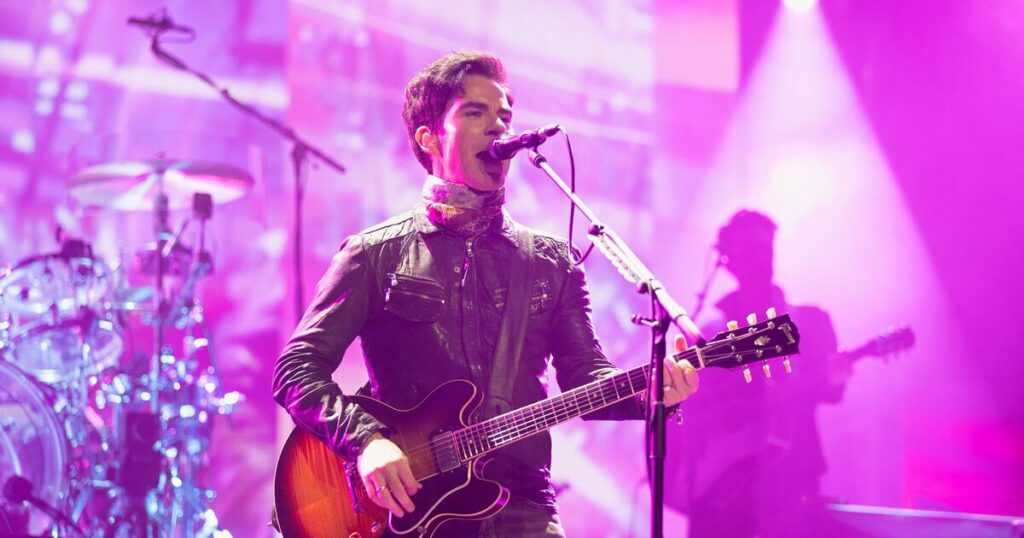

Kelly Jones of Stereophonics performs on stage at the 02 (Image: Redferns)
The Labour Government has been blasted for “flim-flaming the public” with irrelevant statements as Britain’s world-leading live music sector teeters on the brink of collapse. The sector is worth over £7.6bn to UK coffers, yet successive governments have failed to protect grassroots venues from soaring costs that have made their business model virtually unmanageable.
The Music Venue Trust (MVT) say the only solution is a £1 ticket levy on all arena and stadium shows, but new business rate rules are set to hammer arenas with extortionate rises. Shock news earlier this moved indicated that rateable values (RVs) for venues including London’s The O2 and Wembley SSE Arena, Manchester’s Co-op Live and more, would be facing some of the sharpest rises in business rates in the country in 2026. Many will be seeing their annual business rate bills rise by more than double. For the Wembley Arena, for example, it is skyrocketing by 300 %, and for The O2 the annual bills will be rising by £1.85million.
Read more: Every new O2 Arena headline act will trigger donations for aspiring musicians
Read more: UK’s top concert venues under threat of closure as taxes set to rise
The sharp increase comes as previous valuations were based on the COVID-19 period, when there was a significant decline in demand for live music, whereas the new figures are based on the operating conditions seen in 2024.
MVT CEO Mark Davyd was quick to hit out at the decision and highlighted how venues in the UK are already struggling in many cases to make a profit due to rising costs.
He then joined up with LIVE Music, National Arenas Association, The Concert Promoters Association, Musicians’ Union, the FAC, British Association of Concert Halls and more, penning an open letter to Prime Minister Keir Starmer, warning of the dire consequences that may arise.
In the letter, the organisations hit out at the “disproportionate, inappropriate, and unjustified” rates and said that the move “will undermine many of this Government’s own priorities”.

Mark Davyd, director of the Music Venues Trust association, (Image: AFP via Getty Images)
They also shared that the price hike will likely lead to “hundreds of grassroots music venues closing in the coming years”, ticket prices rising for music fans, “thousands of jobs being lost”, and more.
The plight of music venues is being championed by the Daily Express’ Strike A Chord campaign, which is demanding action to protect the talent pathway from school classrooms to sell-out stadium shows. Proposing changes that could alleviate the burden faced by venues, the letter suggested an “immediate 40% Business Rates Relief for our venues”, similar to film studio,s which have been granted relief until 2034, and a “fundamental reform of the valuation system”.
A HM Treasury spokesperson revealed that in the wake of the letter, a cap is in place to ease the blow faced by arenas, and suggested other ways that the government are looking to make the changes smoother for venues and artists in the UK.

Abigail Morris of The Last Dinner Party performs onstage (Image: Getty Images)
They said: “With COVID support ending and valuations rising, some music venues may face higher costs – so we have stepped in to cap bills with a £4.3billion support package and by keeping Corporation Tax at 25% – the lowest rate in the G7,” they said.
“For the music sector, we are also relaxing temporary admission rules to cut the cost of bringing in equipment for gigs, providing 40% Orchestra Tax Relief for live concerts, and investing up to £10million to support venues and live music.”
In return, MVT responded angrily, telling NME the government needs to stop “flim-flaming the public with irrelevant statements about corporation tax” and instead “get serious about this problem”.
Davyd said: “The Treasury response to these issues is highly illustrative of the reason the new Rateable Values are such a huge issue. Treasury officials are fully aware that the revaluations by the Valuation Office Agency are not some minor error that can be corrected with lower multipliers or transitional relief.”

Katy Perry performs at the O2 Arena during her ‘Lifetimes’ Tour (Image: Getty Images)
He says the finer details about “low corporation tax” is probably beneficial for “large corporations making huge profits”, but pointed out it does not have the same impact on the music industry as “over half of the UK’s grassroots music venues are currently trading at a loss and the rest operate on tiny profit margins.”
He added: “The Government’s injection of £10million a year into music is a welcome initiative called the Music Growth Scheme. Obviously it would be possible for the Treasury to tell the Department of Culture Media and Sport to relabel that scheme as the ‘Here’s some money to pay your business rates bill we have accidentally grossly inflated’ but I’m not sure that’s in the spirit of the Creative Industries Sector Plan vision.”
Davyd added that “91 grassroots music venues in the UK will close for live music between April 2026 and April 2029 unless Treasury take a different approach”.
He said: “One venue has an over 400% increase in their total liability for premises taxes.
“We strongly suggest the Treasury get serious about this problem and get involved in sorting it out. We certainly celebrate the existence of Orchestral Tax Relief, but as the Treasury knows GMVs don’t get that relief, so it’s not going to do much for your local grime or rock night.”

Strike a chord logo Daily Express (Image: -)
The new figures for 2026 come after Wolf Alice‘s Joff Oddie appearing at the House of Commons to tell MPs: “I can honestly say, I’m not sure how Wolf Alice would make it work today.”
The changes in business rates also hit after the Labour government announced back in January that they were looking to strengthen the live music sector by enforcing a price cap on how much touts can resell tickets for, and looking into controversial ‘dynamic pricing’ practices.
Once Radiohead, Sam Fender, Dua Lipa and more called for them to stay true to their promises to stay true to their word, MPs shared new rules that make it illegal to resell tickets for live events above the original cost, which will collectively save fans £112million per year. Massive fees from secondary ticket sellers will also be stamped out.
As well as tackling huge resale ticket prices, the government have also previously shown backing for the push for arenas and stadiums to introduce the £1 ticket levy, which sees £1 from every ticket sold being invested into grassroots spaces.
It was gradually accepted by the Government after Coldplay, Enter Shikari, Katy Perry, and Sam Fender all adopted the method in their respective tours, and it was later revealed that 93% of fans were all in favour of the ticket levy.
Since then, artists including Pulp and Mumford & Sons have shown backing for supporting grassroots venues, and together raised over £500,000 for the efforts of LIVE to keep the industry thriving, and The O2 has revealed it will be making a donation to the MVT every time a new artist headlines the arena.